Ice Dams in Western New York: Prevention, Warning Signs and Repair
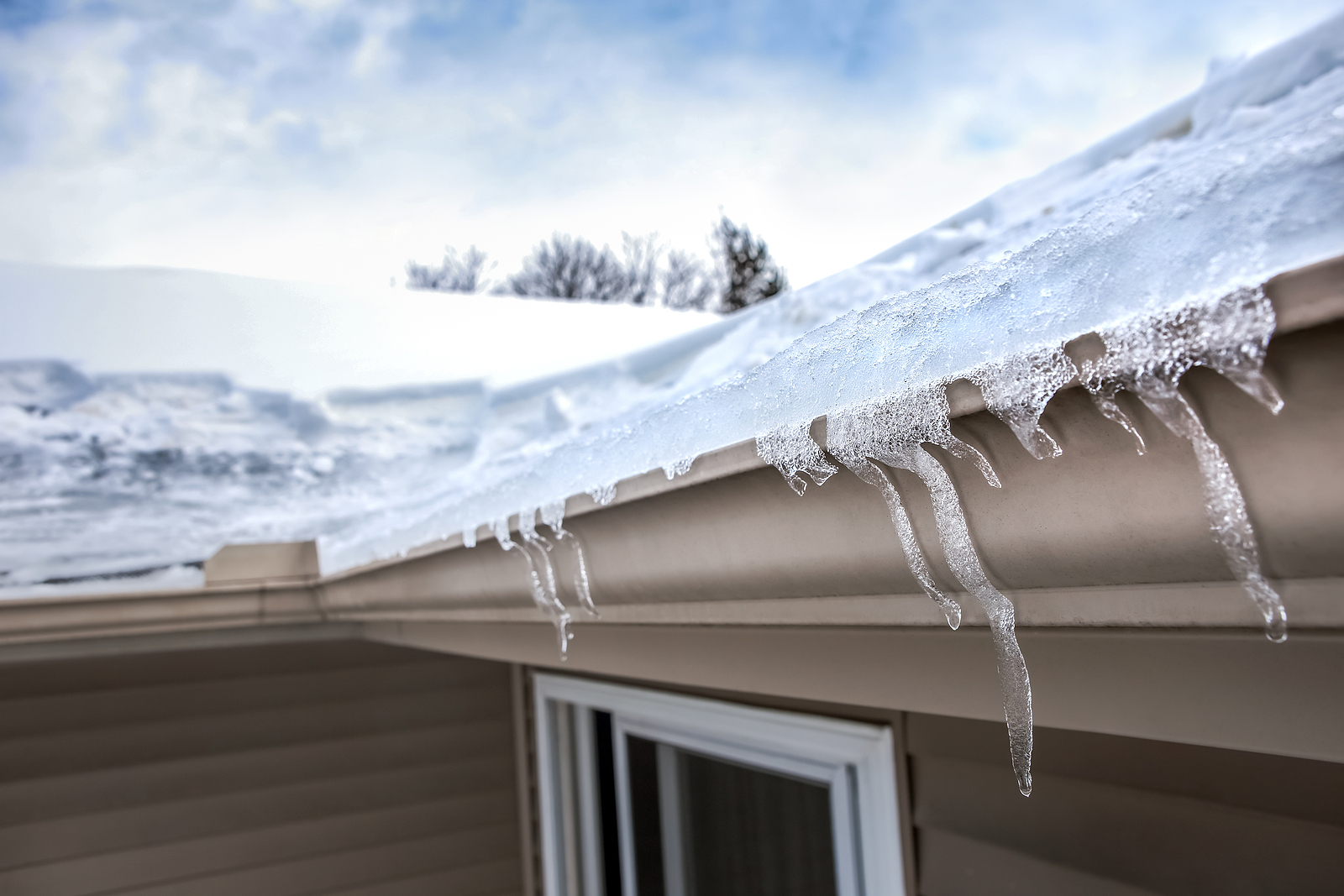
Ice dams form when snow melts higher on a roof and refreezes near a colder eave. The resulting ridge of ice can hold water behind it, allowing moisture to move beneath shingles and into roof decking, walls, insulation, or interior finishes.
Homes in Albion, Holley, Medina, Lyndonville, Kendall, Waterport, Point Breeze, Batavia, Brockport, and surrounding Western New York communities experience the snow, wind, and freeze-thaw conditions that make ice-dam problems especially important to address early.
Warning Signs of an Ice Dam Problem
- Thick ice building along roof edges or in gutters
- Long icicles combined with snow remaining higher on the roof
- Water stains near exterior walls or ceilings
- Damp insulation, musty odors, or peeling interior finishes
- Repeated winter leaks that stop when temperatures rise
- Damaged shingles, flashing, gutters, or roof-edge materials
Icicles alone do not prove that water has entered the home, but heavy ice accumulation deserves attention—especially when leakage or staining is present.
Why Ice Dams Develop
Ice dams are not caused by one issue in every home. Heat escaping into the attic, air leakage, uneven insulation, limited ventilation, roof geometry, drifting snow, sun exposure, and weather conditions can all influence where snow melts and refreezes.
Valleys, low-slope transitions, dormers, additions, and roof penetrations may create areas where snow and water collect. A useful evaluation looks at the roof assembly and the pattern of the problem rather than assuming one universal fix.
Safe Removal During Winter
Working on an icy roof is hazardous. Chopping ice with sharp tools, applying uncontrolled heat, or using materials that can damage shingles and metal components may make the situation worse. Heavy ice can also release suddenly near entrances, walkways, vehicles, and landscaping.
OMNI’s ice dam removal, repair, and prevention services focus on reducing active risk while protecting the roofing materials as much as conditions allow.
Repairing Damage After the Ice Is Gone
Removing visible ice does not repair water-damaged materials. Once conditions are safe, the roof should be checked for damaged shingles, flashing, underlayment, decking, and related wood components. Interior staining may be the final visible symptom of a problem that began farther up the roof.
If moisture has affected the roof structure, OMNI can coordinate structural repair and framing and carpentry work with the roofing scope.
Planning for Future Winters
Prevention should be based on the cause observed at the home. Depending on the situation, recommendations may involve roofing details, air-sealing or insulation work by an appropriate specialist, ventilation review, drainage, or repairs to damaged materials. The goal is to improve the complete roof-and-attic system rather than promise that one product solves every condition.
Review OMNI’s broader roofing services and Western New York service areas.
Request an Ice Dam Evaluation
If you see active winter leakage, significant ice buildup, or recurring roof-edge problems, do not wait for the damage to spread. Contact OMNI Construction to discuss ice dam service or related roof repairs.